Rebranding Your Small Business: How to Know When It’s Time (and What to Do Next)
Feeling embarrassed to share your business? It might be time for a rebrand

As a brand designer, I’ve seen these moments of misalignment come up again and again.
“I don’t like my logo.”
“I’m embarrassed to share my website.”
“My brand just doesn’t feel like me anymore.”
You still love your business but showing your brand has become difficult or a little uncomfortable. You know something’s just not right.
Every small business reaches a point where they no longer feel aligned. What worked when you started no longer reflects where you’re headed. This is growth and completely normal.
And this is where many small businesses start considering a rebrand.
Rebranding isn’t about chasing trends or getting a new logo just because your competitor has. When done right, it can bring your brand back into alignment with your values, your audience, and the impact you want to make.
This guide will help you understand when rebranding your small business makes sense, what to consider before you start, and how to approach it strategically.
What Rebranding Your Small Business Really Means
Rebranding isn’t just slapping a new logo on your website and calling it a day.
Yes, a logo is part of your brand, but it’s only one piece of a much bigger picture.
Rebranding your small business is really about shaping how people experience and perceive your business as a whole.
That includes:
Your messaging and tone of voice
How your values show up in your communication
The emotions your brand evokes
The consistency across your website, socials, packaging, and print
The trust signals your brand gives off at every touchpoint
The goal of a rebrand will vary for each business. For you, this might mean appealing to a new target audience, modernising the brand, aligning better with your refined offers, or differentiating yourself from your competitors.
Branding, at its core, is about perception.
People make quick, often subconscious decisions about whether a business feels trustworthy, aligned, and “for them”, long before they read every word on your website.
And this is where many purpose-driven businesses get stuck.
For example:
If you’re offering a considered, premium eco-stay or artisanal product, but your branding feels DIY or disjointed, you may struggle to attract customers who value quality and are willing to invest. Not because your offering isn’t strong but because your brand is creating friction instead of ease.
When there’s a mismatch between what you offer and how you’re perceived, it can undermine your positioning.
A thoughtful rebrand helps close that gap.
What to Think About Before You Rebrand
Many small business owners think they just need a new logo or colour palette, but what’s really missing is clarity.
Before touching visuals, it’s important to step back and look at the foundations of your brand.
Here are a few key questions ask yourself first:
What still works in my brand? What do I still feel connected to?
How has my business changed? Is it my offer, process, audience?
Where do I want it to go in the next 3-5 years?
Rebranding doesn’t automatically mean starting from scratch. Often, it’s about refining what’s already there, and bringing focus and intention to the parts that matter most.

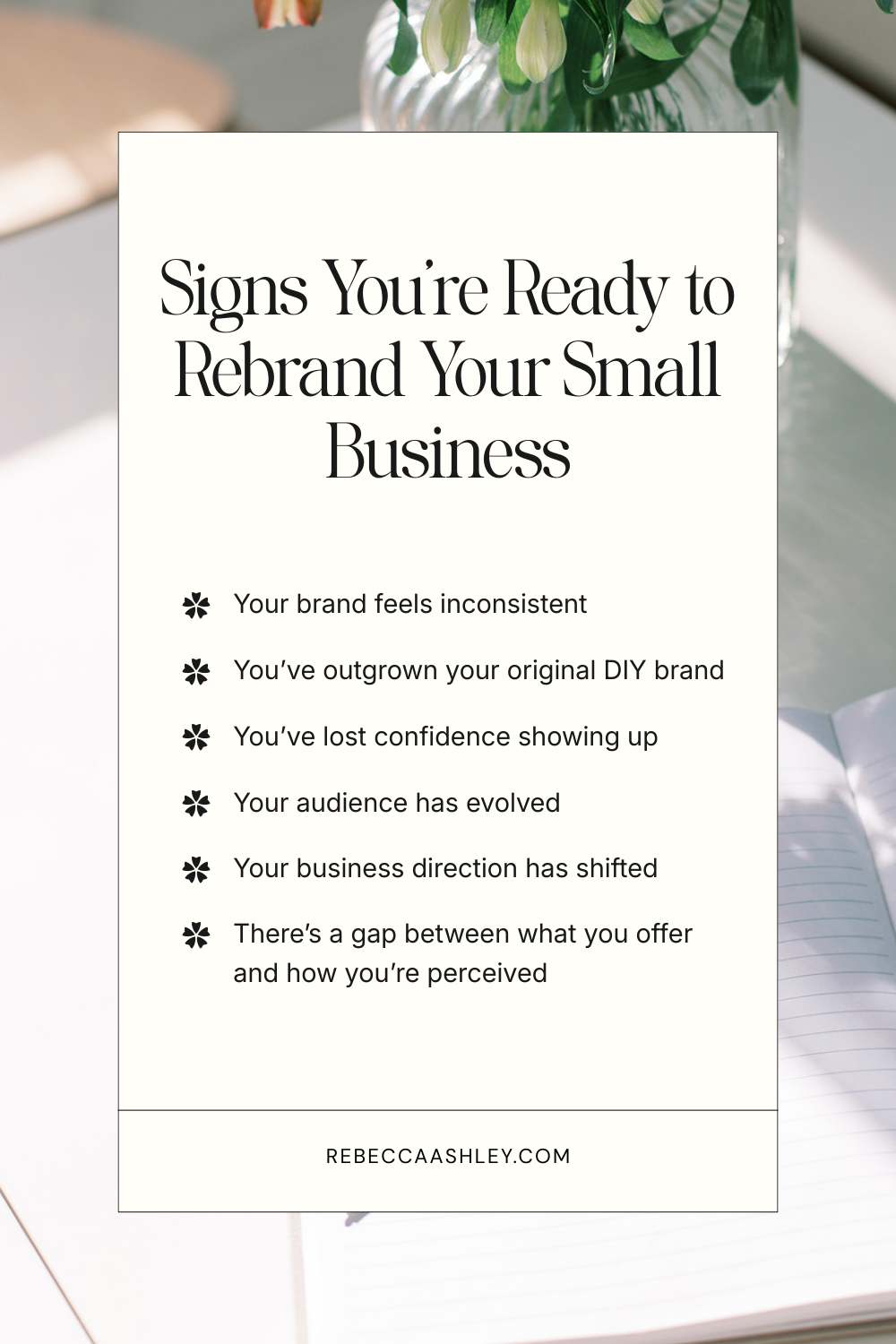
Signs It Might Be Time to Rebrand Your Small Business
Your brand feels inconsistent: Your website, social media, packaging and printed materials don’t quite feel like they belong together. You’re constantly tweaking, adjusting or explaining yourself.
You’ve outgrown your original DIY brand: What worked when you launched was perfect for that season but your business has matured, and your branding hasn’t kept up.
You’ve lost confidence showing up: You hesitate to promote your work, pitch yourself, or put your brand front and centre (even though you know the quality is there).
There’s a gap between what you offer and how you’re perceived: You’ve refined your services, pricing or values, but your branding still signals something smaller, cheaper, or less considered than the experience you actually deliver.
Your audience has evolved: You’re no longer trying to appeal to everyone. You want to attract more aligned, values-driven clients and repel the rest.
Your business direction has shifted: Maybe your offerings have changed, your mission has become clearer, or you’re ready to step into a more intentional, long-term vision for your business.
Common Rebranding Mistakes Small Businesses Make
Rebranding your small business doesn’t have to be chaotic, but these common mistakes can lead to frustration later:
Starting with visuals instead of strategy
Copying competitors instead of clarifying your own voice
Rebranding too often without addressing the root issues
Designing for personal taste rather than audience perception
Treating branding as a one-off project instead of a long-term system
A considered rebrand should make decisions feel easier, not harder.
What Changes When Your Brand Finally Feels Aligned
When your branding reflects the true care and intention behind your work, things become easier.
You may notice:
Greater confidence showing up and sharing your work
Clearer messaging and decision-making
More aligned enquiries
Less second-guessing and DIY overwhelm
A stronger sense of direction for your business
Where to From Here?
If any of this resonates, you don’t need to have all the answers yet. I recommend starting with a brand audit to get a professional outside perspective, or clarity exercise to help you understand what’s actually going on beneath the surface before jumping straight into a rebrand.
Wrapping Up
Rebranding your small business isn’t about fixing something that’s “broken.” More often, it’s about acknowledging that your business has grown but your brand hasn’t caught up yet.
When your branding no longer reflects your values, direction, or the quality of your work, it can start to hold you back. A strategic rebrand brings clarity and helps your business show up in a way that feels aligned and intentional.
FAQs
-
Yes but when it’s done for the right reasons. Rebranding is a good idea if your business has evolved, your audience has shifted, or your brand no longer reflects the quality and care behind your work. If the issue is clarity or consistency rather than direction, a strategic refresh may be all you need.
-
Most small businesses don’t need to rebrand often. A full rebrand is usually only necessary every 5–10 years, or when there’s been a significant shift in direction, audience, or offering. Small refinements and updates along the way are completely normal and often encouraged.
-
Not necessarily. Many rebrands build on existing foundations such as refining what works and adjusting what no longer fits. In fact, keeping familiar elements can help maintain trust while still moving the brand forward in a more intentional way.
-
Start with clarity, not visuals. Understanding your audience, values, positioning, and goals will guide every design decision that follows. Working with a strategic brand designer, or starting with a brand audit, can help break the process into manageable, thoughtful steps.
-
Rebranding costs can vary widely depending on the scope of work, the size of your business, and the level of strategy involved. A small refresh may cost significantly less than a full strategic rebrand. Other factors to consider are replacement of marketing materials, signage etc. However, rather than focusing solely on cost, it’s helpful to consider the long-term value and impact on your business.

Hi, I’m Bec!
I’m a brand designer and illustrator who’s passionate about helping nature-led brands feel confident through thoughtful, strategic design and heartfelt visuals that reflect their values and attract aligned customers.
I take a calm and collaborative approach to brand strategy and design. My clients don’t need to have everything figured out, we uncover it together. Through discovery and in-depth research, I help businesses get to the heart of who they are, how they’re positioned and how they want to be seen.
You can learn more about my branding services here, or get in touch any time.